Inetersting Albini-Brandlin Japanese Converted 1867 Enfield
Created on February 25th 2026
Rare Enfield M1867 Rifled Musket Conversion for Japan

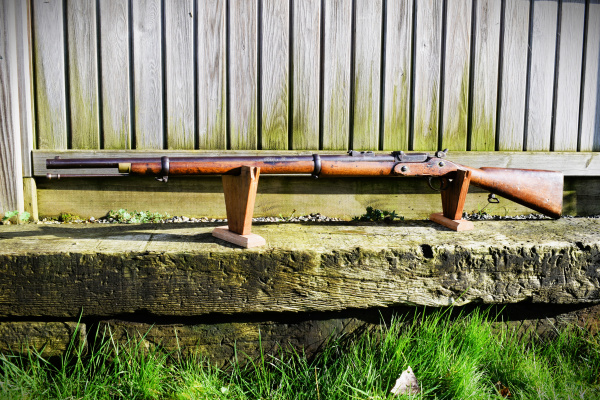
This single rifle has to be the most rare conversion By Sword & Musket has had the privilege to market and research. What do we have before us? To all intents and purposes, what was a two band Enfield. Most obviously resembling the Two Band Sergeants’ Rifle. Enfield lock-plate and hammer-type action. The flat flush fitting lock plate is simply marked “1867 / TOWER.” That single marking causes the first pause for thought; “purpose built, or conversion?” The Belgian Albini-Brandlin conversion first occurred in the same year ! The rear of the lock plate shows a partly worn Crown, but with no cypher, indicating which monach was on the throne; this was a practice of companies like B.S.A. for private contract items. Very difficult to see but certainly a BSA & Co round cartouche on the RHS of the butt-stock. Brass fittings indicate a possible sea-service connection. Expertly spliced filler behind the hammer indicates after issue, armoury work.

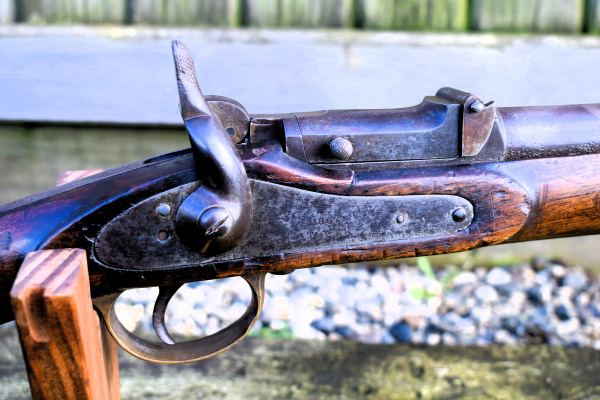


So, next thing, barrel length: being a two band weapon the actual barrel measures a nominal 30″, but here’s the catch; the bayonet fitting is of the sword type side mount, which would not have been on the long rifle. However usually, long rifles were the basis for the conversions. That same mount is marked “981”. Store that in your mind for later. The barrel is iron as showing heavy external corrosion but, the bore is very good and with that comes the next surprise. It has a five grove rifled bore just as the Sergeants’ rifle has. Caliber is .577 Snider. Overall length; 48.3/4″. Trigger Pull 13.5/8″ to center.

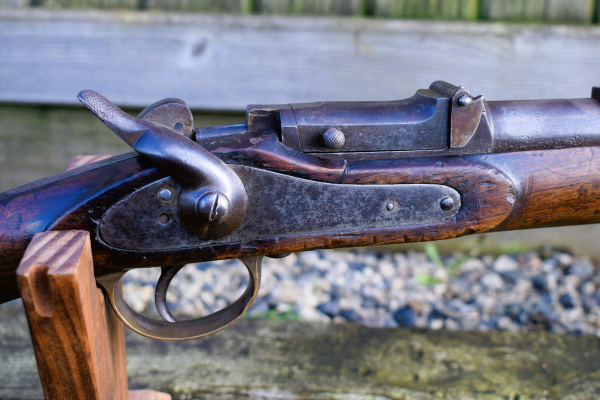

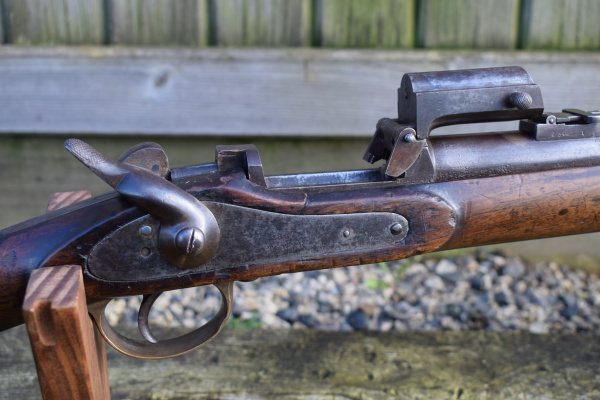
The “shoe” part of the conversion, which has been applied to the breech end of the barrel is approximately 3.1/4″ long. The main feature being a hinged tipping block which pivots at the front to open the breech and at the same time eject, by a double claw ejector, the used cartridge. It is not possible to tell without disassembly if the rear tang is intergral to the “shoe” but, it is unusual in that it has two stock fixing screws showing on the upper surface. A small steel button or stub with a knurled surface to open the block protrudes from the RHS of the same. The hammer has also been substantially changed. It has no forward extension which used to hit the nipple; it is flat in front of the cocking ear. It has been extended, back across the axis of the rifle, so it can actuate a plunger or rod. This passes through what would have been the “hut” of the original rifle, to strike a recessed firing pin within the block. That action will lock the block into position and stop it opening under pressure when fired. There is also a small sprung pin at the lowest point of the round breech block. This should also spring the block into position, but that is currently worn out. It is repairable. This is all, almost, standard Albini-Brandlin design.
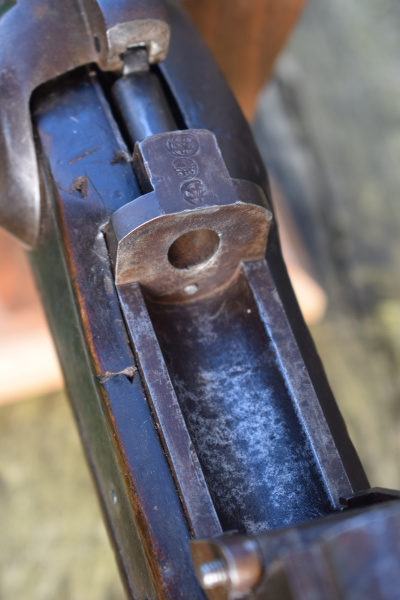
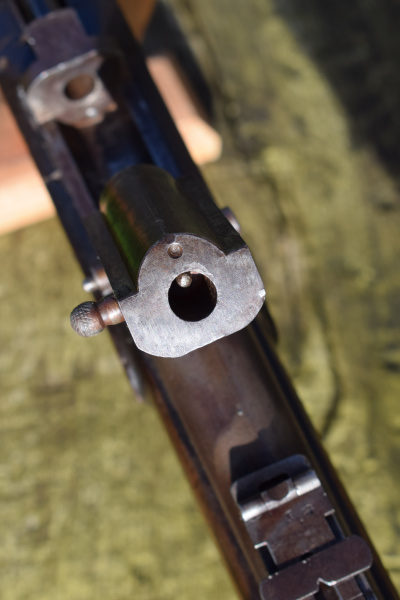
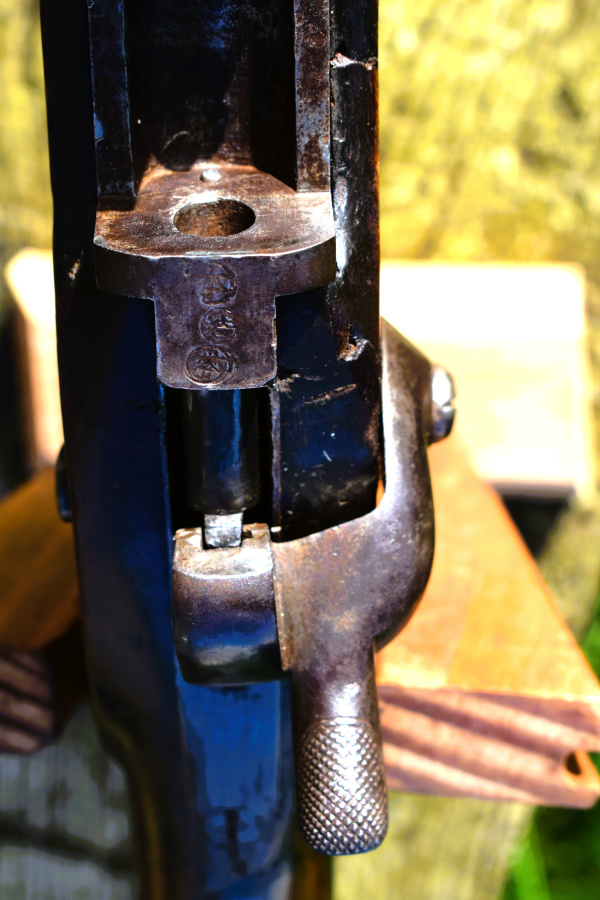
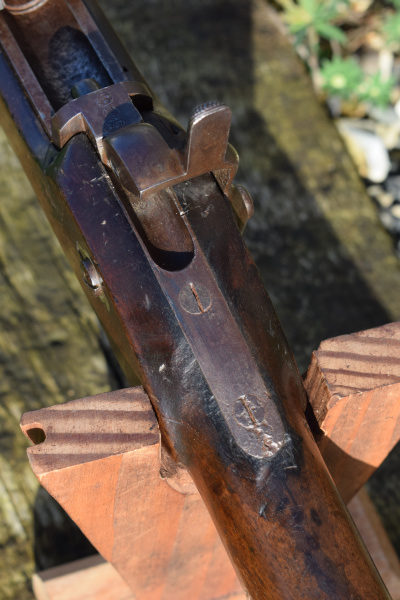
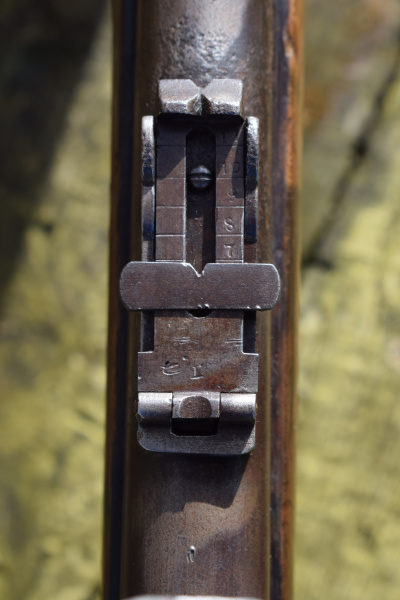
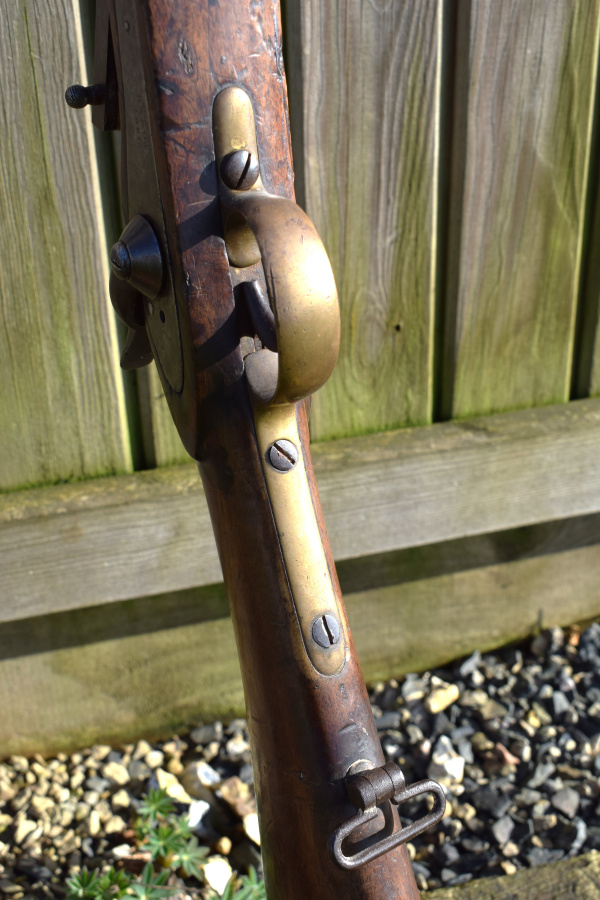
When in the fully open position the underside of the breech block is marked with three small digits;”981″ then “XII” Remember the “981” on the base of the bayonet lug? That has to be to do with the conversion. Without stripping down the piece it is not possible to see if this turns up again on a hidden part of the hammer or any other parts, but I’d put money on it that it appears at least one more time in one of those areas. The last stand out thing to note, are the markings on the top of the hut; three superb circled Japanese markings, either acceptance marks or Armoury markings but unlike anything I have ever seen before!
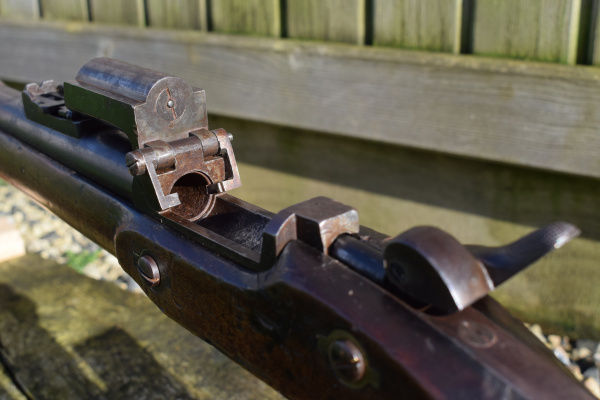
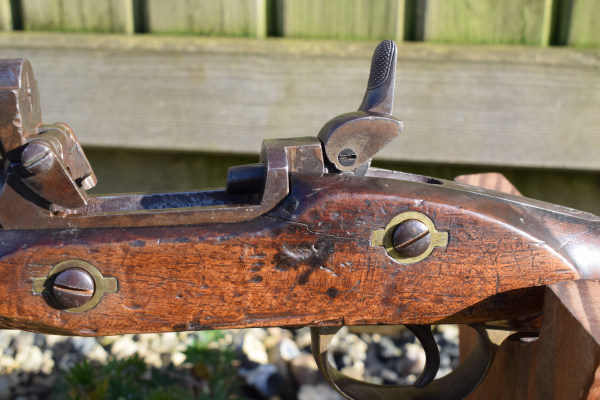
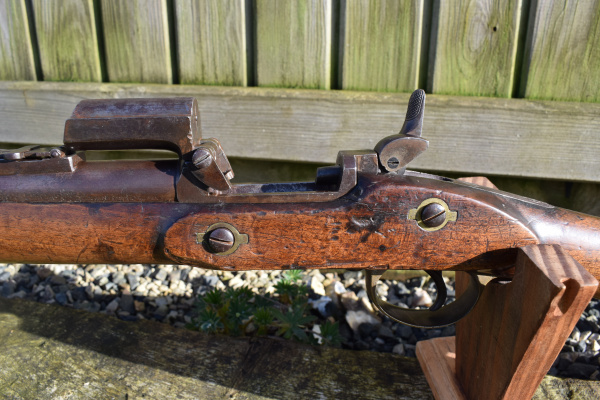

The weapon has a full length cleaning / clearing rod under the barrel of typical Snider type. Iron sling swivels on the forward band and screwed into the underside of the stock behind the brass lower band. Normal type rear ladder sights but marked “981” on the underside, only graduated to 1100 yards. This is represents a superb chapter in early breech-loading conversions and a very rare one indeed. For anybody interested in the conversions this is one that will not surface easily again. Condition overall is exactly as expected with a weapon of this vintage, nothing is out of the ordinary apart from the excellent condition of the bore. Stock in good overall condition with the classic crack extending from the brass action screw cup to the action cut out (repairable but normal) There are none of the expected proof markings that run down the LHS of the barrel just above the woodwork. Normally one might expect to see the word “STEEL” and copious proof marks on a Snider converted Enfield. A very interesting piece of history from a period when the old feudle Japan was keen to rapidly catch up with the arms race in which they were seriously lacking.

Section 58(ii) No license required
£ 1495.
Comments Off on Inetersting Albini-Brandlin Japanese Converted 1867 Enfield