Canadian Ross M10 Mk III ……………… (F 1259)
Created on March 28th 2026
The Ross M-10 from Canada
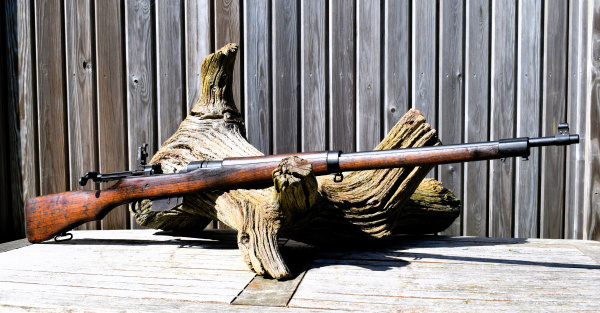
The highly desireable Ross M10 in .303 in standard WW 1 military specification. Famously over complicated and extremely well made, but not a rifle for the trenches with all the mud, dirt and water the ruled conditions on the battlefield. Highly accurate with excellent sights, easy to operate in the right conditions but not a rifle that had the tollerences to wisthstand the evil conditions that waited for it in Flanders. So much so, that Canadian troops of any experience, would scour the battlefield for disguarded SMLE’s in preference to the Ross.
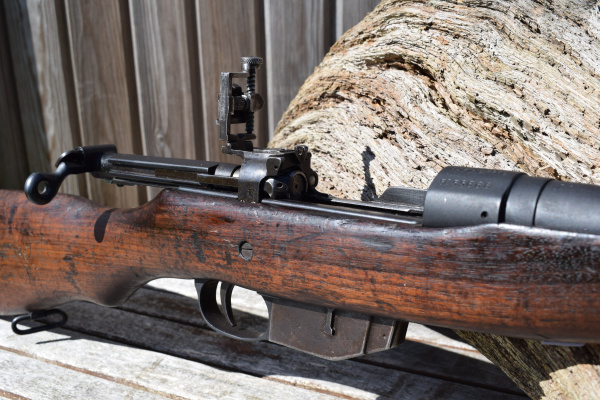
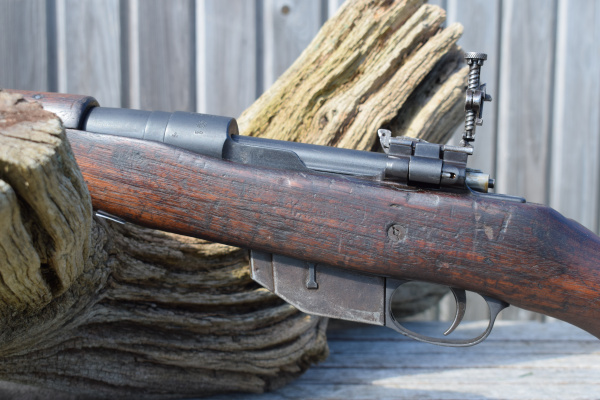
The Ross is a work of art, in the field of engineering. It is totally at home on grassy, dry, clean ranges and in competition where it excells. Its origins were not that of a battlefield rifle. It was designed by a Scottish sportsman; The 9th Baronet of Balnagown, Charles Ross residing in Canada. It owed its roots to the straight -pull Austro-Hungarian Mannlicher rifle. The first Ross model of 1905 relied on a straight-pull turn bolt system with solid locking lugs. Unfortunately, by the time the 1910 model came along, the design had been vastly complicated by replacement of the solid lugs for an interupted thread effect, with multiple locking channels. In effect, a diced set of locking lugs. The original rifle had not performed terribly, but when the number of mating surfaces was vastly multiplied, so was its achilles heel, the chance of ingress of dirt and grit. Just a small piece of hard grit could be enough to hinder the bolt from fully locking closed. Then, if the unfortunate operator was still able to pull the trigger, the whole thing could blow up in his face! Soon the troops were using up valuable time and effort trying to clear obstructions. However, before too long it was hard to avoid the conclusion, that the rifle was unfit for front-line service.
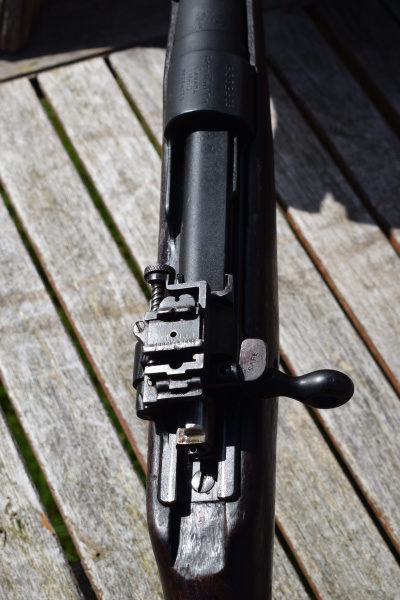
The other problem that soon became apparent, was the chance of incorrect reassembly of the bolt. It was possible to put the thing back together after cleaning and not fully wind in the bolt head. This would lead to a similar catastrophic failure and at least two deaths were reported. All that aside, when some rifles were selected for “Sniper” conversions, with the addition of the Warner & Swasey prismatic musket sight, the rifles proved very accurate and were much cherrished for this duty.
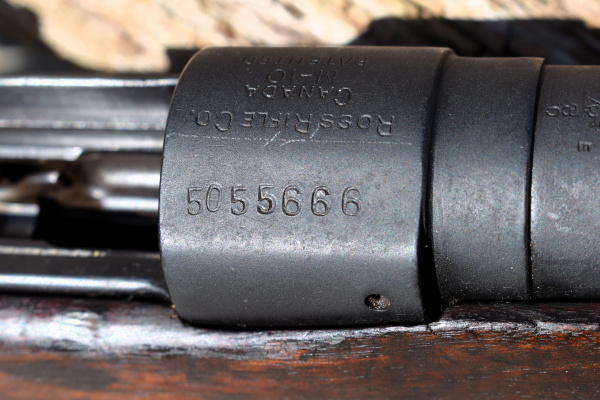
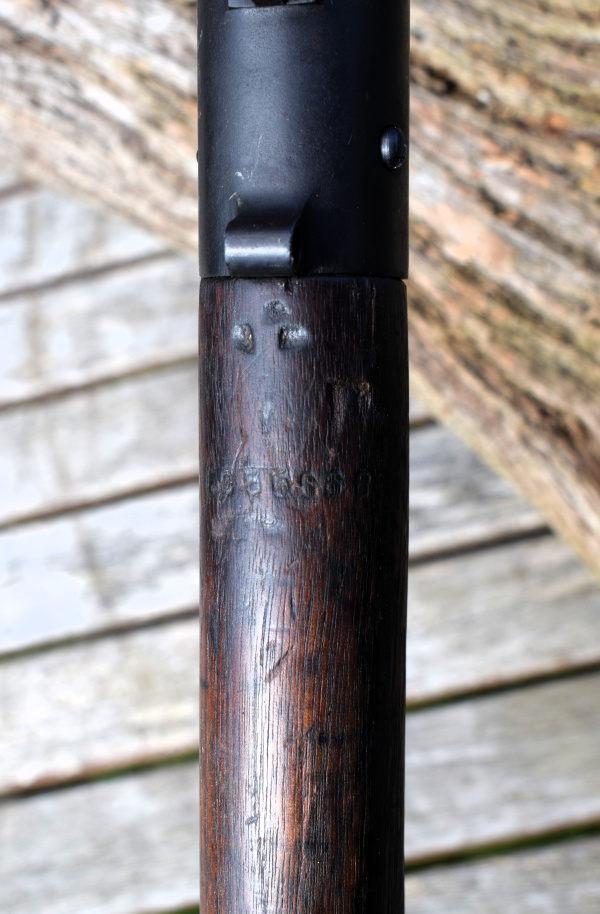
On first contact with the rifle (unless your are a giant of a man!) the thing that is immediately apparent, is that the rifle is very long, with a short butt; and feels front heavy. Overall the rifle is 50.1/2″ long. The round barrel is 30.1/2″ long and the trigger Pull is 13.1/8″ to centre. It weighs nearly 9lb 12oz empty. Chambered in .303 British and takes a standard British a five round clip. This rifle carries the serial number “5055666” this is repeated on the rear of the bolt arm, below the safety device. The rifles were made in Quebec, Canada.
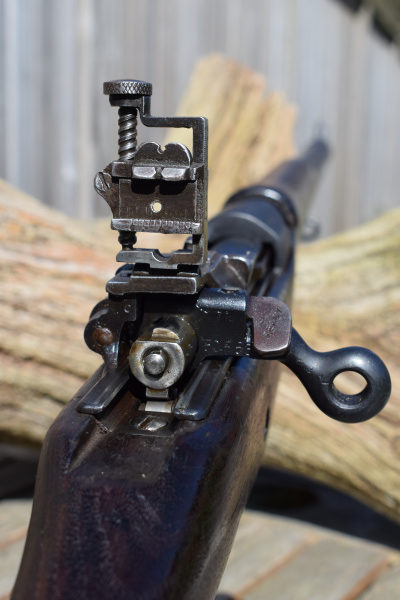
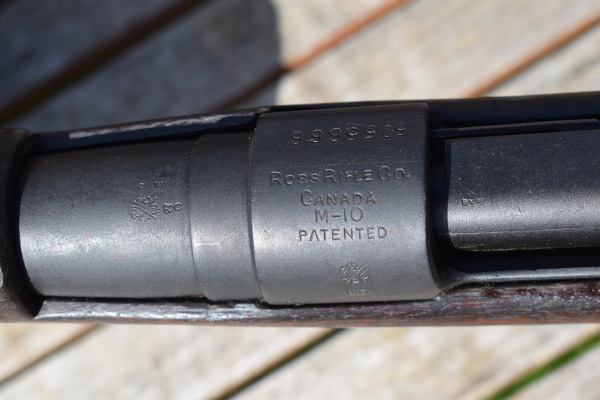
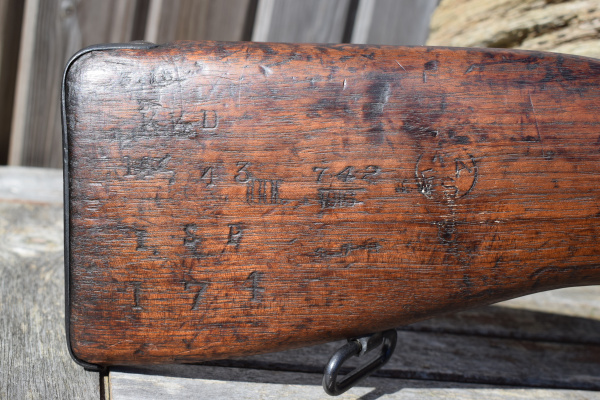
The crest of the receiver is marked “ROSS RIFLE Co. / CANADA/ M-10 /PATENTED” Adjacent to a clear “DCP cross scepter, crowned proof mark.” Proof mark repeated over the breech of the barrel. Gas escape hole to RHS of breech ring. Straight, doughnut-hole bolt handle with cross safety. Extractor claw to the RHS of the exposed bolt body. The serial number itself does not tell an awful lot about the date of production but it is generally accepted that approximately 419,000 military rifles were built in total. 350,000 went to the military over the whole period of 1903 to 1915. But we do have one more area to look at and although it is extremely difficult to descipher the stock bears an issue date. There is a multitude of issue numbers and stamps on the RHS of the butt-stock. Close insoection shows a clear “742/1916”. Other stamps include “I.S.P./ 174” “.43” A clear “III.” and a circled “Arrow/ F. A. / S.” cartouche. There are others, some crossed out, some just not readable, but, there is a wealth of potential research there for the right kind of person!
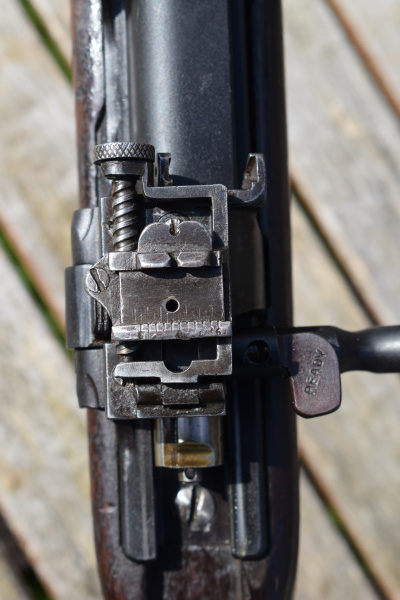
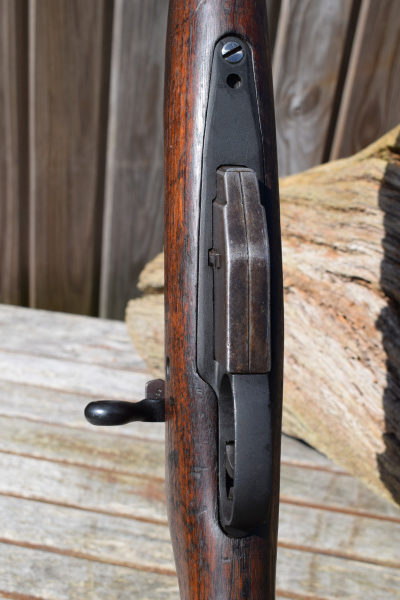
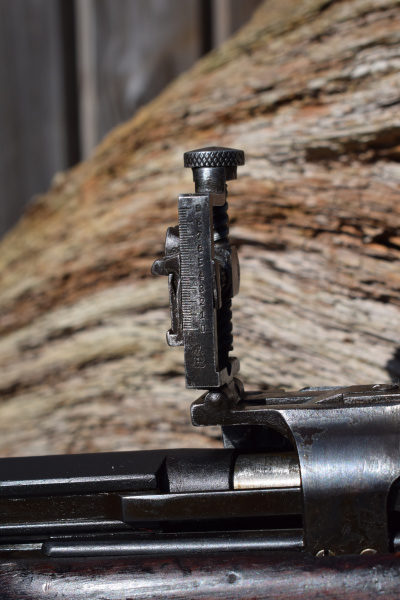
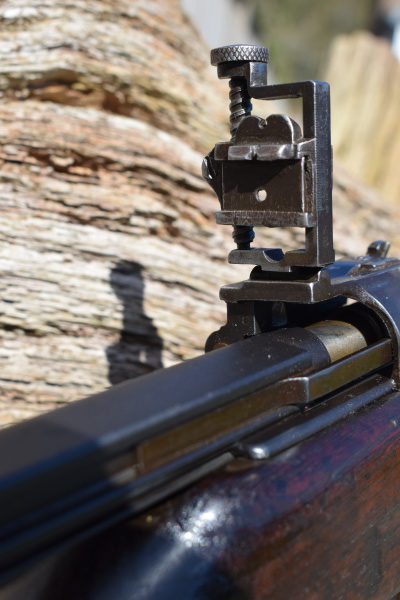
The standard fitment rear aperture sight was actually very good and capable of fine adjustment. It folds down and has both windage and elevation adjustment. However, the apertures are not very fine. The front post is guarded by a pressed metal fitment. Front barrel band includes a bayonet mount. The barrel is guarded by a half length hand guard leaving a full 12″ exposed between bands. Two stage trigger within trgger guard with pressed steel exposed, non removable single stack, box magazine. Sling swivels and steel shaped butt-plate. The plate has a sprung brass hatch to keep oil bottle within a/f.
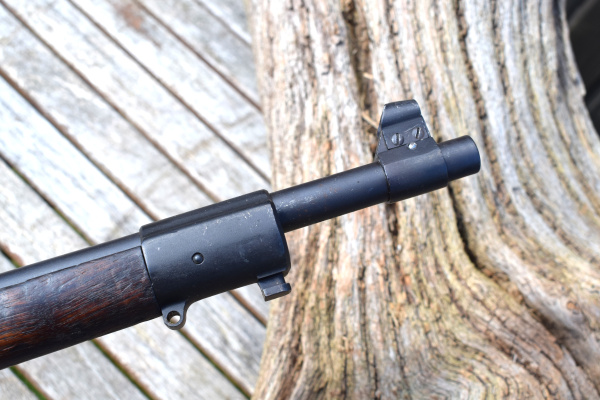
Action smooth and easy to use with positive actions. The finish is generally a matt black, resembling a worn phosphate effect. The bore is very very good, with bright shrp defined and clean rifling with a four groove RH twist. With this length of barrel, this is going to live up to the Ross’s reputation for accuracy. A fine and rare collectible on the UK market. Proofed and ready to go.
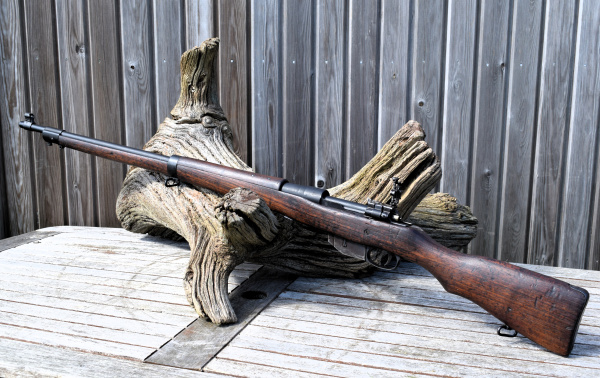
FAC Required – Stock No’ F 1259
£ 2450.
Comments Off on Canadian Ross M10 Mk III ……………… (F 1259)