Fully Intact Type 99 Last Ditch Arisaka Rifle……… (F 1249)
Created on April 1st 2026
Unmolested, Matching and intact Type 99 Last Ditch Rifle by Nagoya Army Arsenal
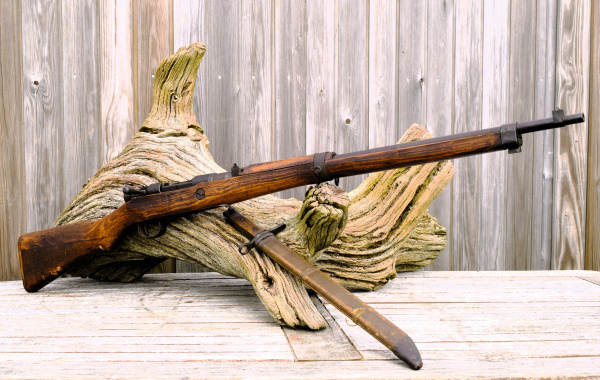
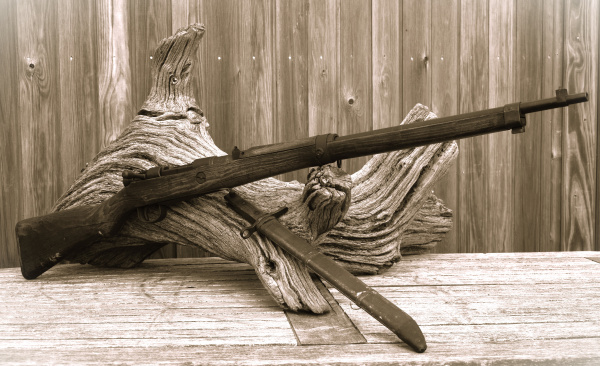
So what so special about that ?! It looks like a lump of Junk ! Thats the point ! Compared to what the Japanese Arsenals had been turning out it was a bit basic, but it could still able to take an Invader down. All the essentials are there, all the tollerences are correct and the bore is still the same. So for a serious collector, who knows the history and the marq, this is as important as a Type 99 Sniper configurated model. In essence when the Japanese were forced to revaluate the requirements of a bolt action rifle, considering the pummeling their war machine had taken, they stripped away all the frills and ended up with this. Any extras like finish turning of the barrel, complicated pressed steel fittings and intricate sights were all discarded. This was the Ersatz model, the basic article – the bare minimum rerquired to do the job. It wasn’t pretty, it wasn’t well finished but it was functional.
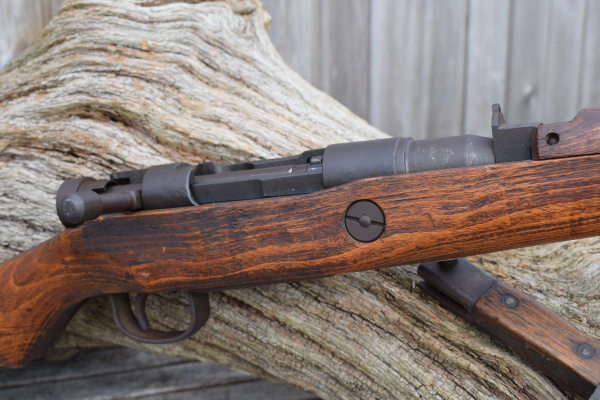
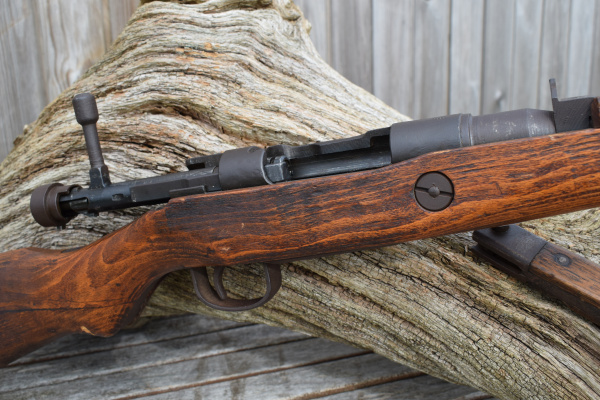
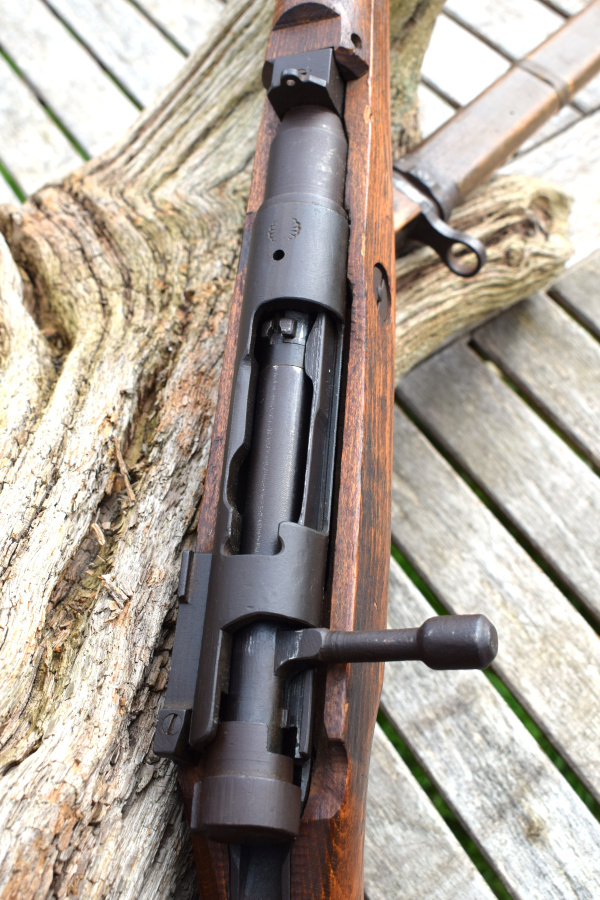
Quite often with these old timers, previous owners have replaced components to “improve” the rifle, in their eyes. However, at this point in time, that is not an advantage to the collector. To find one with its original parts is very exciting and quite frankly, rare. Many Last Ditch examples By Sword & Musket has handled have had replacement bolts – that is a normal expectation from war time surrendered rifles. So to get over that hurdle first of all is a matter of good fate! Then usually, some well meaning attempts to improve the shooting experience or performance will have crept in, and the originality is lost. This is what I mean about “unmolseted” This rifle is as close as I have seen to original while selling these items. It has a place in my minds eye collection.
The Type 99 Rifles were built purely during the Second World War, with production starting in 1939. Early on in production some long rifles were produced in the new calibre, but the majority of production was this, the new pattern Short rifle. Experience had taught the Japanese that they were seriously out-gunned in knock down power against the 8 x 57 Mauser, that the Chinese had principally used in the Sino-Japanese war; they needed something more powerful. They already had a 7.7mm machine gun round that they could work on, this was further developed into a rifle round and adopted. Built after 1943, this rifle shows all aspects of “Last Ditch” type production.
The Type 99 was not dissimilar to the Type 38 already in service. After some modifications, the transition was not too difficult to achieve. The Type 99 is more of a purpose built battle rifle; higher grade machine processes and materials were substituted for a more basic alternatives. The milled trigger guard for instance was replaced with a sturdy bent piece of steel. Other fittings on the rifle including the barrel bands and the butt-plate also received similar treatment. The result was quicker and easier to produce in the long run – costing the Japanese war economy less in materials and man hours. Due to the present condition of this rifle it is hard to tell if they retained the chrome-plated bore and bolt face as the bolt is blued and the bore it dirty. The bore is complete without interuption but admittedly, dark and dirty, needs new keeper TLC.
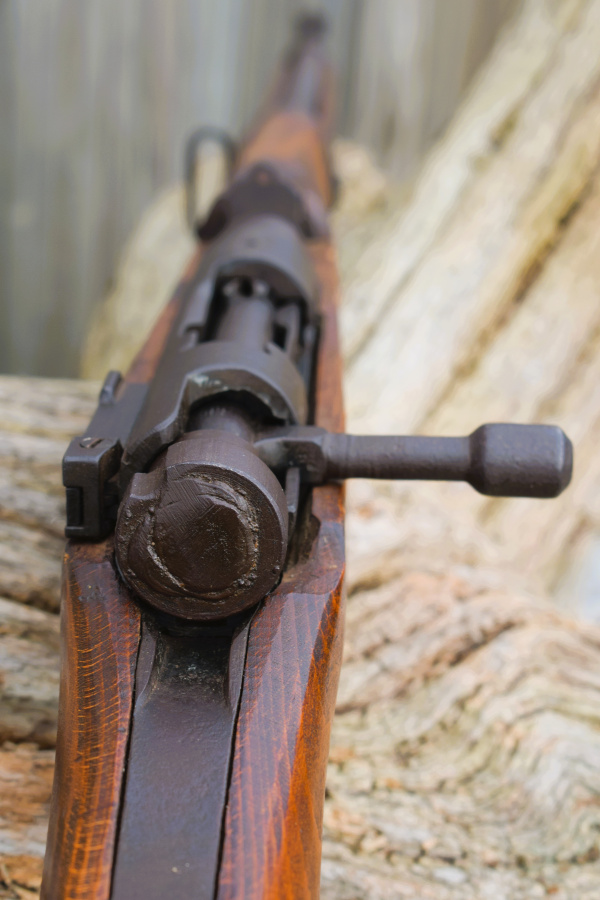
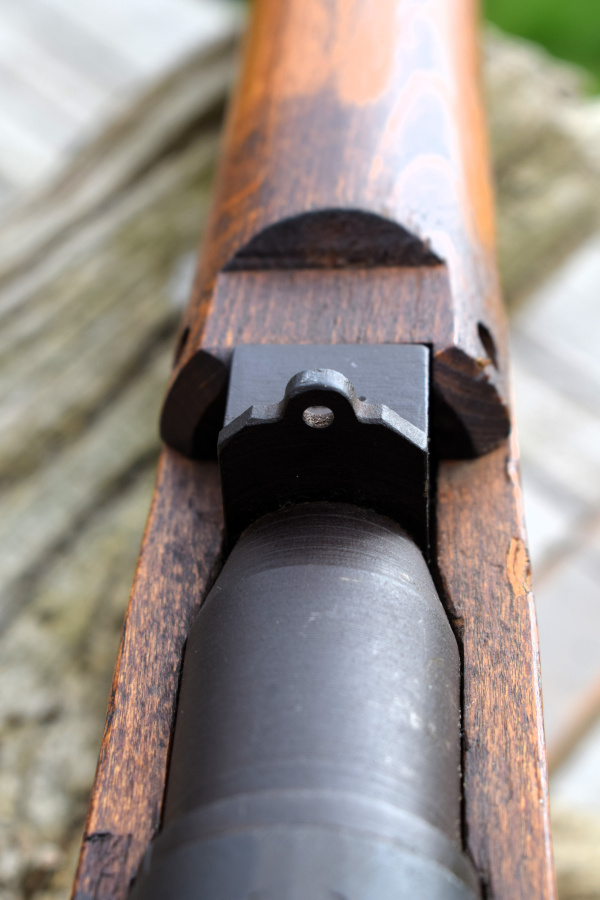
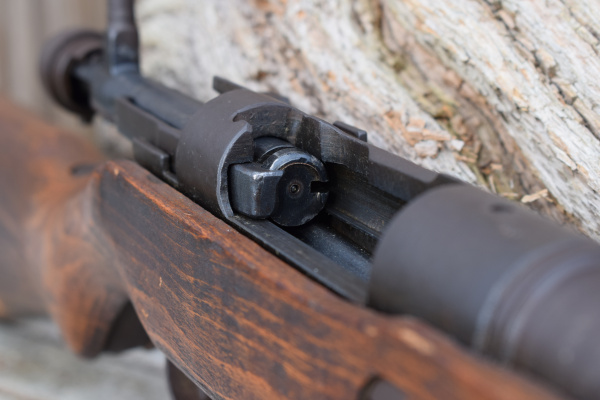
The rear sights are the most basic single aperture, placed onto the top of the barrel. The butt-plate is actually wooden itself ! The straight bolt arm is a crude affair with a very basic knob and last three digits of the matching serial number, on the underside of the bolt arm root. The safety mushroomed-shaped back of the bolt is of the crude un-machined, welded type. The main exposed portion of the barrel is rough turned and has not benefited from a second or third pass on the lathe, leaving strong tooling marks and bumps along its length. The stock is of the standard specification but rough in finish and has been duffle cut. The duffle cut gives us clear liniage over its exit from the war zone. No finger groves, no provision for a cleaning rod. Crude welded stock fittings. All of this further pin-points its place in the latter part of the war and indicates what a desperate struggle the Japanese arsenals were going through by this time.
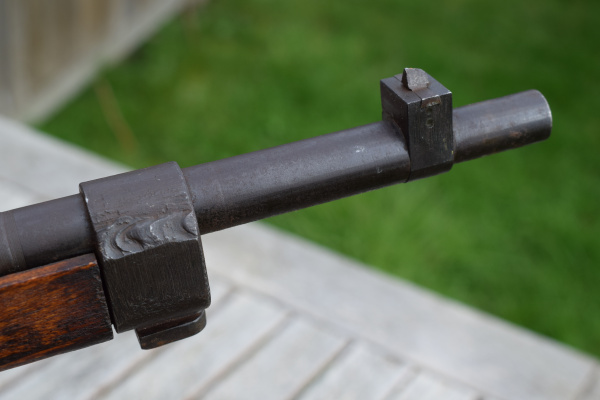
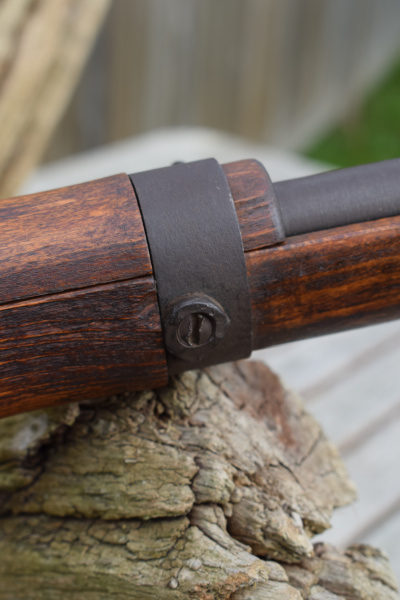
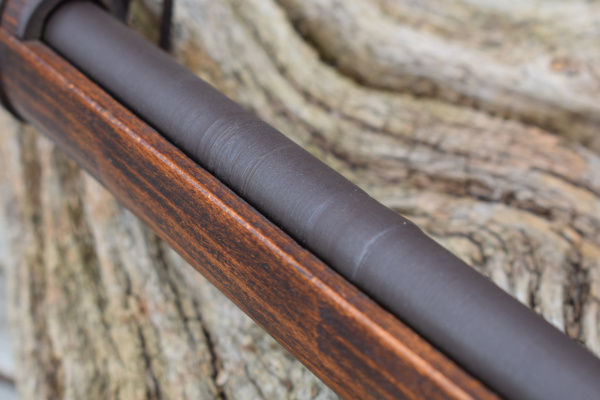
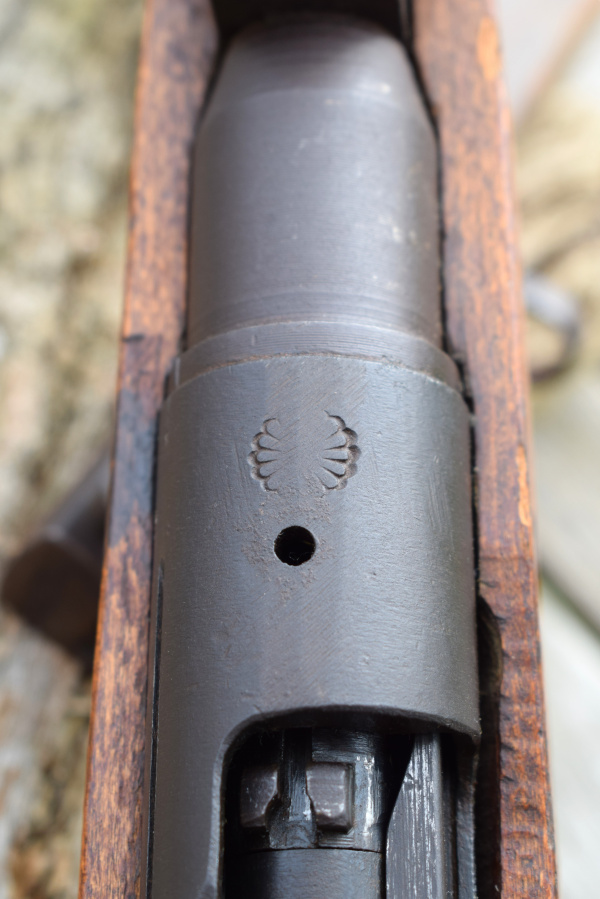
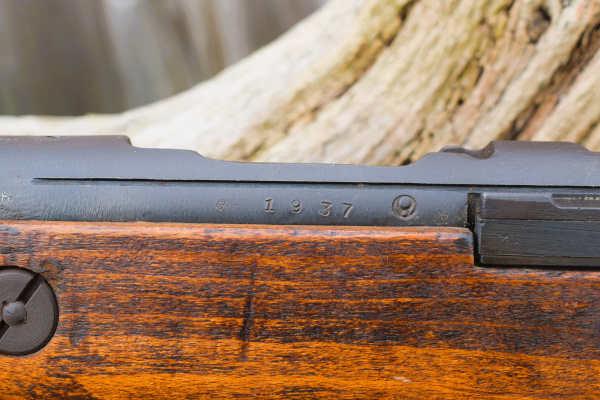
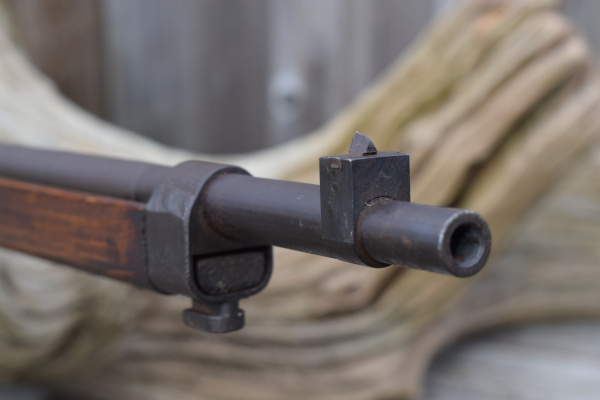
The receiver ring has a partially intact Imperial Japanese Chrysanthemum, but no Type 99 markings. A single gas escape hole in the crest of the receiver. The outer action wall carries more markings; from left to right: “late series mark /1937 / Nagoya Army Arsenal mark / inspection mark ” Matching bolt with the digits “937” on the underside of the bolt arm root. Bolt release catch to rear LHS of action – spring weak. Welded type for-end cap with bayonet lug. Basic inverted “V” sight, un-guarded by protective ears. Action mechanically sound and good four-groove bore. A good example to complete an Axis rifle collection and a plain illustration of when Japan was really on the back foot, but was still refusing to give up and face the inevitable. Chambered in 7.7mm with a five-shot internal magazine. The rifle is 44″ long. The round barrel is 25.3/4″ long and the trigger pull is 12.3/4″ to centre.
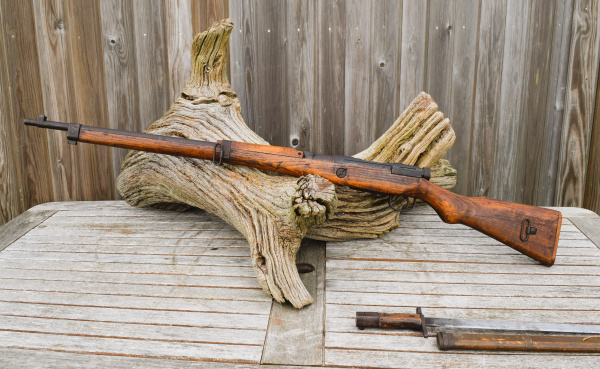
Overall finish to metal components is the same all over. This is important as it verrifies its untouched quality. It basically looks brown and rusty. Plumb dark brown, rust is not active. Almost as if it has just been pulled from a newly discovered bunker on a hot sandy, palm tree strewn Island.
FAC required – Stock No’ F 1249
£ 750.
Rare Last Ditch Bayonet with Wooden Scabbard
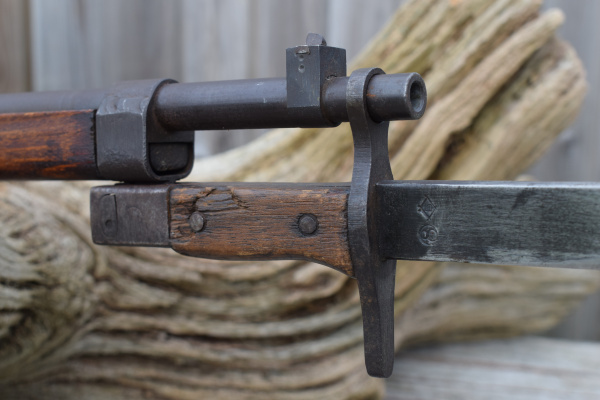
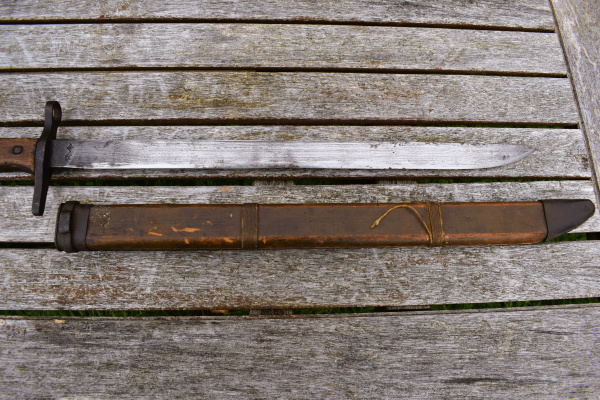
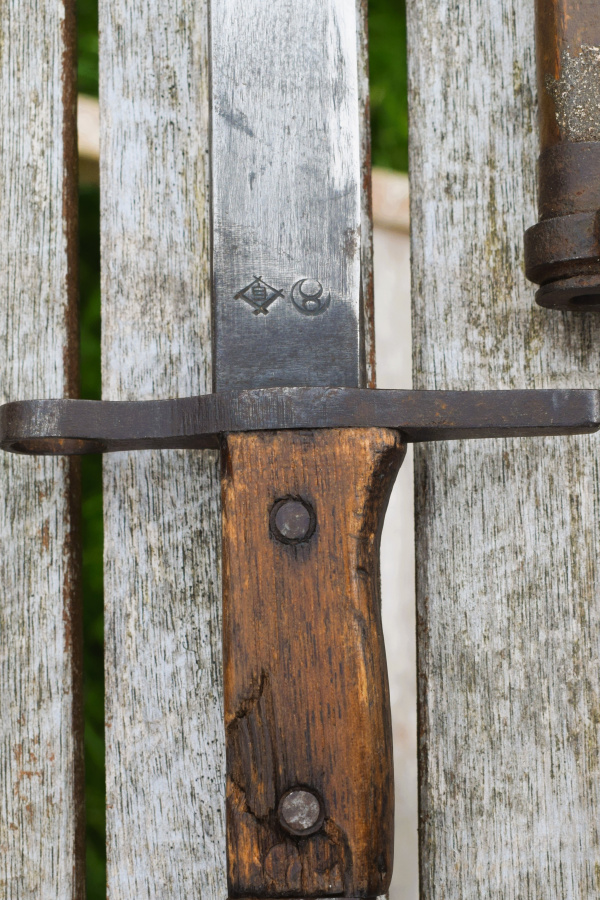
To top of the perfect example of a Last Ditch Rifle – The Last Ditch Bayonet also by Nagoya Arsenal. No visible serial number. 20.1/2″ overall in scabbard.19.3/4″ unsheathed. Blade flat with single edge – no fuller. Straight cross guard. Plain wodden grips – one slightly damaged, but fitting well. Sprung retention clip – good spring Blade shows correct patina for age. Two clear stampings close to cross guard. Nagoya Arsenal plus one otherwhich looks like a pile of blocks withon a diamond border, apparently meaning; Toyoda Jidou Shokki (Toyoda Automatic Loomworks).
Very interesting two piece wooden scabbard with steel pressed fittings top and bottom. The locket is closely fitted around the top of the scabbard and fixed with a slotted screw. The chape at the base is fixed by a rivet. Spaced equally along its length are fine string bindings. The whole painted in field Olive green. All in excellent condition condisering the fragility of the construction and its age. A very rare thing, even in blade collecting terms but fitting perfectly to the rifle above.
£ 250.
Comments Off on Fully Intact Type 99 Last Ditch Arisaka Rifle……… (F 1249)