Magazine Lee-Enfield Rifle Mk II
Created on May 11th 2026
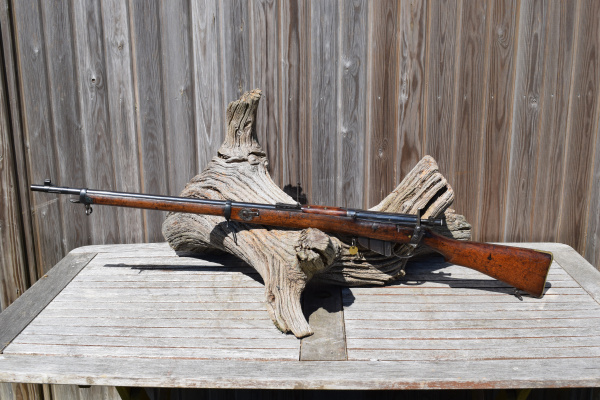
Magazine Lee-Enfield Mk II Rifle for 1893
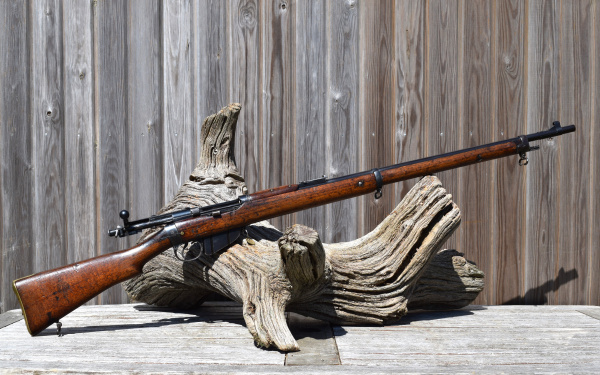
A fine condition early Mk II Enfield by Sparkebrook
To say “of standard military specification” is a a difficult one to 100% back up. It rather depends on which military specification and for when? The fact is that many of these rifles went through almost continual developments and improvements. How far this one progressed, is a bit of a detective game. The rifles often entered the ranks of the Volunteer rifle organisations after the regulars had finished with them. It would depend on how much money the head of a Volunteer regiment was willing to spend on arming his men. Most of those kind of “old Soldiers” were very Victorian in their outlook; it might be a case of “single shot rifles were perfectly alright for my men !!” Or, on the other hand, you could have a benifactor at the head of the regiment, who worked on a completely different set of values. The technological modern warfare of the day could be a matter of pride and his men would have nothing but the best! Nevertheless, many Armchair Generals formed Volunteer rifle corps and paid to arm them out of their own pocket. This was especially true within the time period where “Palls” regiments were springing up. This rifle’s early postings started in the period of the second Boer War. It is beleived that this rifle did in fact travel out to South Africa, but may have only participated in guarding the docks, where the British were landing their supplies.
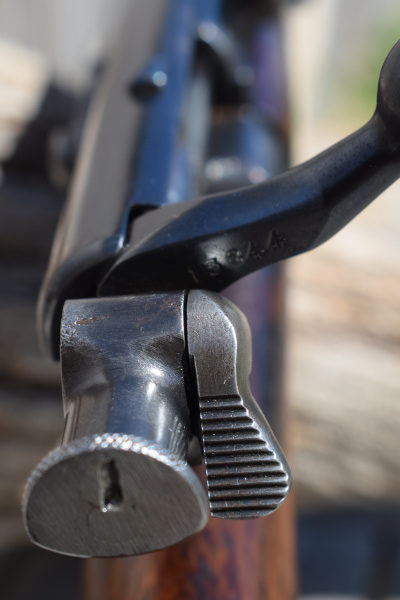
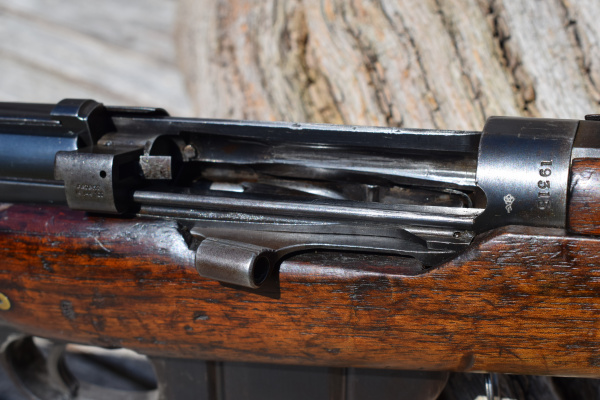
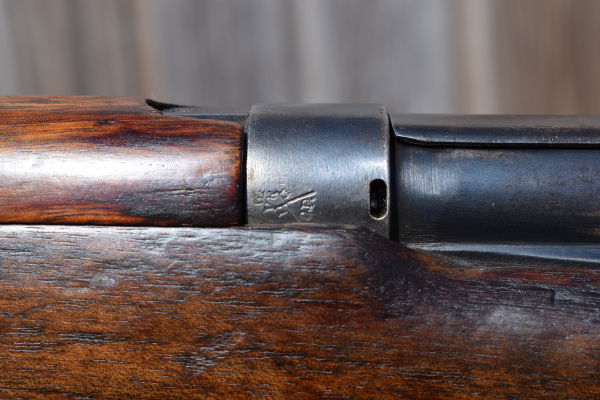
Built at Sparkbrook in 1893, chambered in .303 with a ten shot magazine. This example has not had a charging guide added to the bolt head or a charging bridge/guide to the action. But, it does have Enfield rifling which is a big advantage. We know this as a marking of “E” appears on the top of the knox form. This came about with the development of smokeless powders that burned quicker than the ammunition used in rifles fitted with Metford barrels. Metford rifling has more grooves and peaks than Enfield. The later has defined square topped rifling with distinctive grooves between the lands. The rifling in this barrel is excellent. 5 groove left hand twist pattern with no pitting or misting. It is possible that this rifle could have had the barrel changed to Enfield early in its lifespan. Proofmarks on the receiver ring and on the barrel both have indications of 2nd proof. What is really interesting, is that the receiver mark shows “crown/ V.R / crossed penants / 2 P” (Victoria) If you remove the short handguard between the rear sights and the receiver, it shows another set of proofs which include; “crown / E.R / crossed penants / 2 P.” It appears there was a change of monach while the process was carried out! Edward VII ascended to the throne. ” 2 P.” would usually mean second proof. Victoria dies in 1902 after 64 years on the throne; if my theory is correct; this was in for rebarrelling in that year !
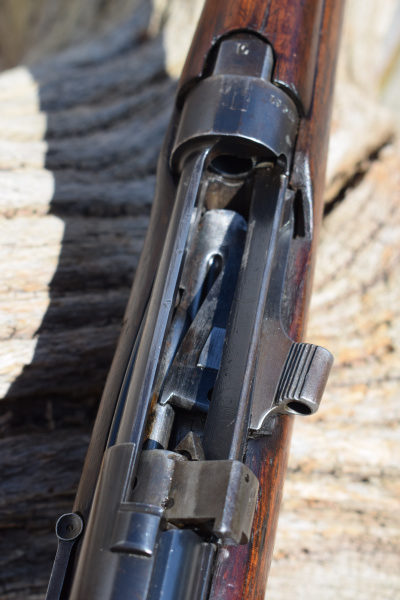
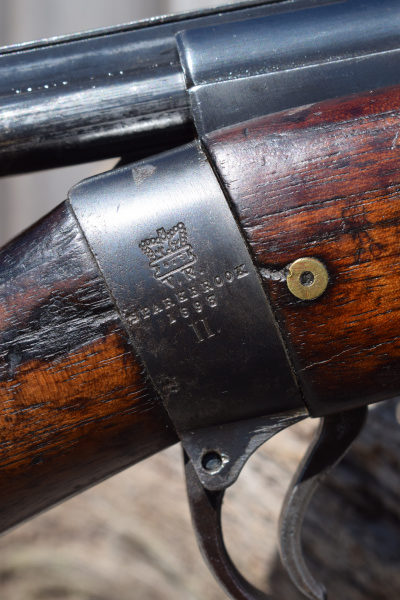
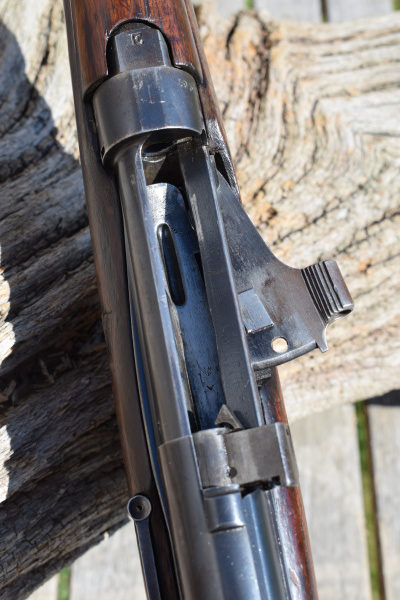
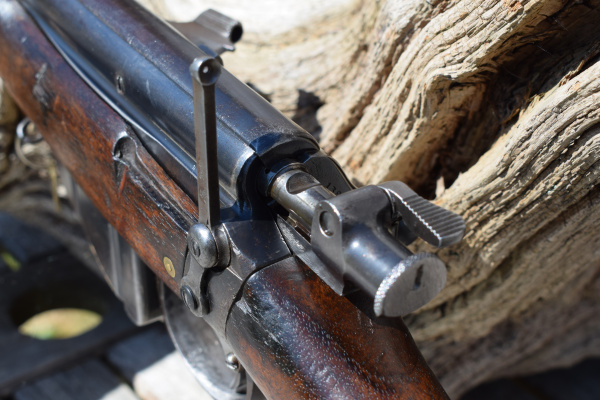
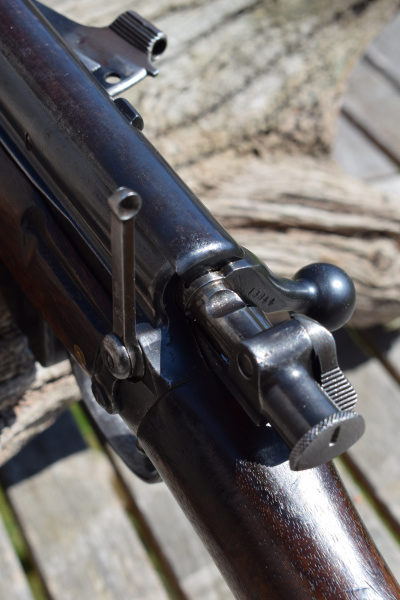
Classic Enfield turn-bolt action but for the first time a safety catch was fitted. Not on the top of the wrist and rear of the action but on the bolt itself. The bolt has a longer rod running down its core which includes two notches in its upper exposed surface, these are for the safety mechanisium to lock into. At the rear it a “D” shaped cocking piece viewed as if laying on its back. The bolt has a pressed steel dust cover. The trigger is serrated to aid grip and the magazine release is within the trigger guard. The folding aperture for the long range volley sight, “WD” marked, is mounted on the rear LHS of the action and wrist. Makers markings are on the RHS of the wrist socket and read as follows; “Royal Cypher / V.R. / SPARKEBROOK / 1893 / II” The bolt is fitted with a sprung steel dust cover to hinder the ingress of unwanted materials. Operating through a narrrow slot upon the RHS of the action is the magazine cutt-off device. The powers that be, were very wary of, what in their eyes they viewed as ammunition wastage. They didn’t want their men firing off loads of ammo’ which had to be carried to the point of contact. So this device was added and the soldiers would only be allowed to use the magazine if orders were given to do so. With the device in position single rounds have to be loaded from above, one by one; thus slowing the unessesary wastage of ammunition. The same device went on the be fitted to all early SMLE’s. The serial number of the rifle is stamped on the RHS of the receiver reading; “19315.” Unfortunately the bolt is non-matching.
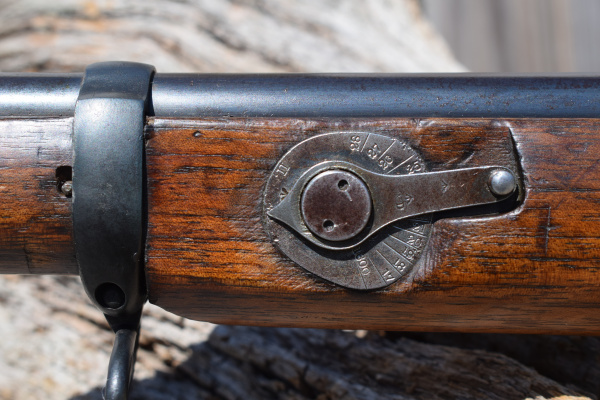
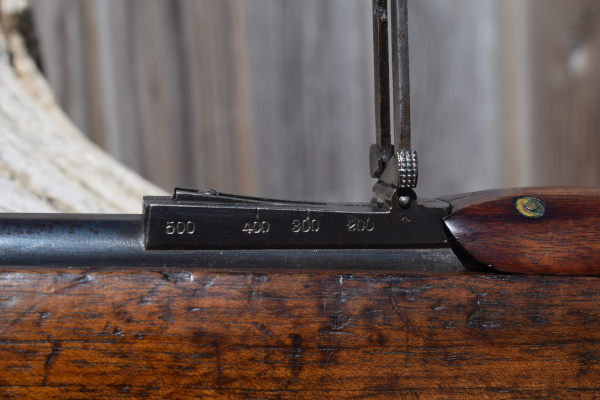
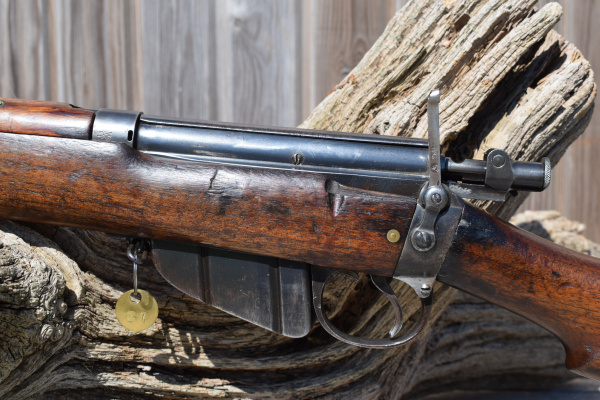
The rifle also retains another nice early feature, namely a full set of long distance volley sights. The aperture is on an arm of approximately 1.3/4″ in length which pivots at its base from the rear LHS of the action. Clearly “WD” proofed. The second component is the front part, situated on the LHS of the forend. This comprises of a dial and pointer ranging from 1600 yards to 2800 yards. All parts being correctly WD marked with a confirmation that this is the correct dial for this rifle; in that there is a clear “II.” marking. This sight puts the rifle at a distinct angle, unlike any seen from conventional sights and creates a barrage of falling bullets at the required distance thus clearing obstacles like defensive mounds infront of trenches, this is commonly known as Volley Fire. Often on the later SMLE rifles parts of these vintage sights have been removed so it is especially pleasing to see them on a rifle that has been around even longer. The standard rear sight bed is marked with 200 to 500 yards on the LHS. The ladder is graduated from 600 to 1800 yards.
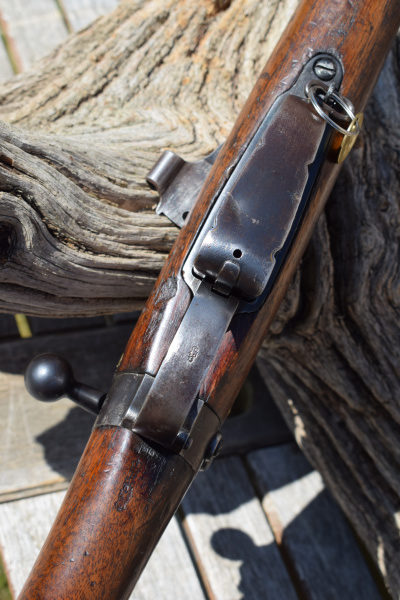
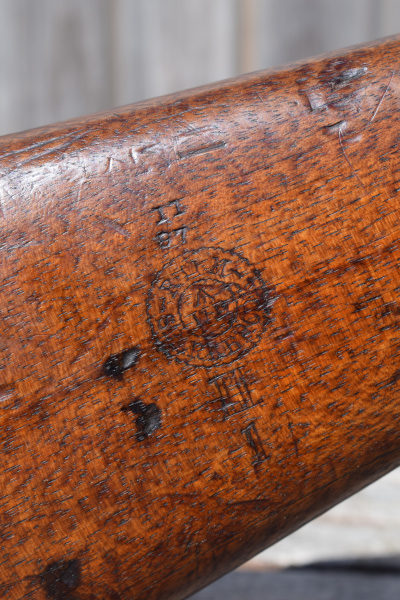
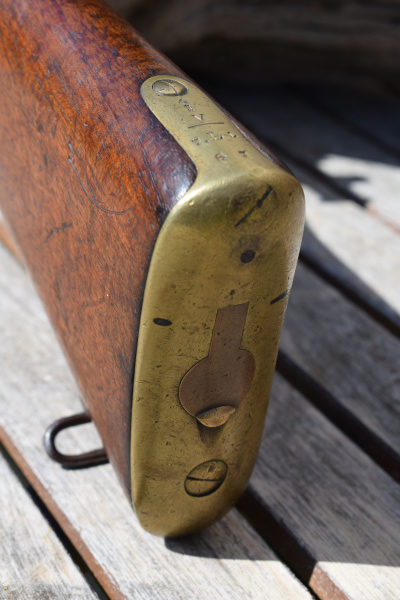
Further regulation manufacturers markings are visible on the RHS of the buttstock, namely the cartouches, they read from top to bottom; “11/97 / R.M. SPARKEBROOK / WD broard arrow (center) / 1 1 . / 1″ There are further crowned enfield inspection marks on the underside of the wrist, just behind the trigger guard. Brass butt-plate with long upper tang and trap for cleaning bottle. Brass cleaning bottle within, WD marked along with manufacturers initials; “H.J. & S.” The rifle is a nominal 49″ in overall length. The round blued barrel is 30.1/4″ in length. Trigger Pull to centre is 13.1/4″
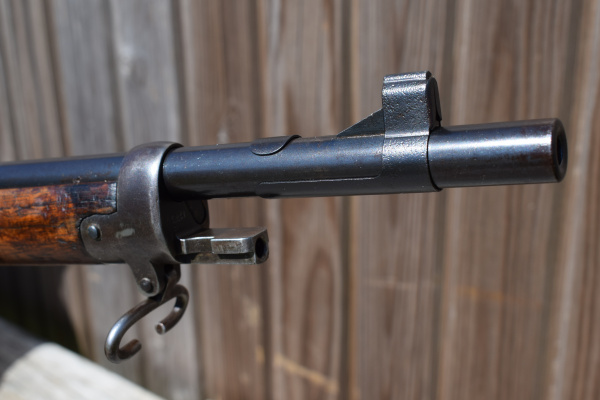
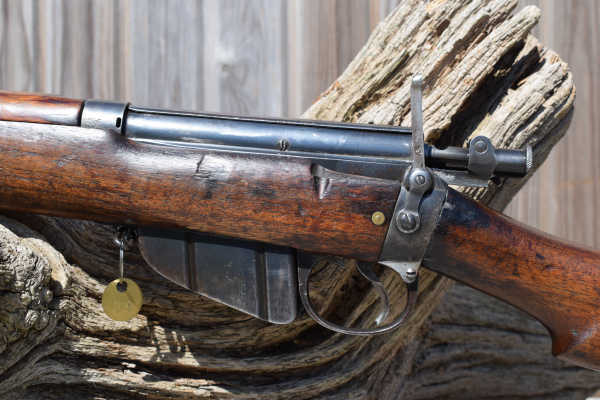
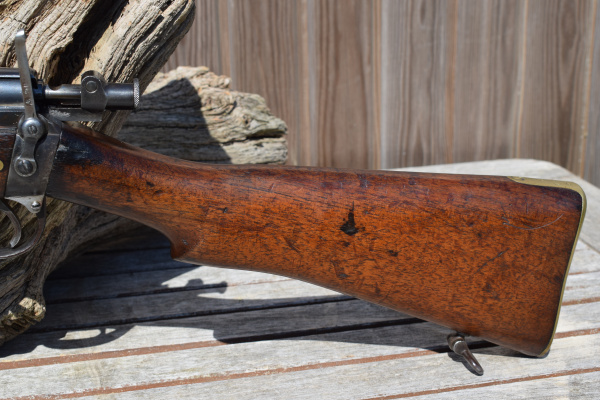
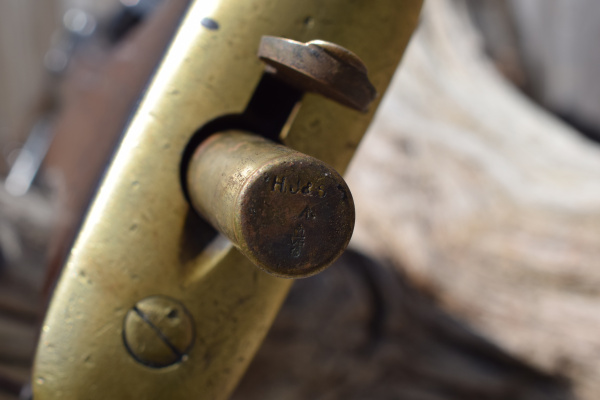
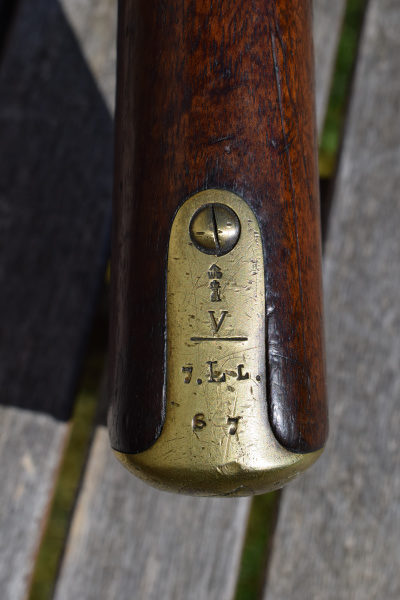
Then we come to what has been hand stamped into that upper tang, it reads: “V / 7. L L / 67” These are the unit markings that the rifle was assigned to. The “V” means volunteer. 7 L.L. (I beleive) stands for the 7th Liverpool Light and this is where the link with service in South Africa has been detected in research. In the end doing the research and seeing early photos of the men that carried these weapons is half the enjoyment of collecting, I happily leave this to the next keeper. Condition on this example is good and the number of original features all lead to understanding exactly what you have here. For example the lack of cleaning rod in this instance is not down to a loss – they were actually turned in and removed from service, so to find one would be unusual. UK Nitro proofs applied in 2015. This weapon has not been on the UK collectors market as held in collection.
FAC required
£ 1850.
Comments Off on Magazine Lee-Enfield Rifle Mk II