Type 44 Arisaka Carbine by Kokura Arsenal……….. (F 1276)
Created on March 20th 2026
A Battle-Hardened Type 44 Carbine
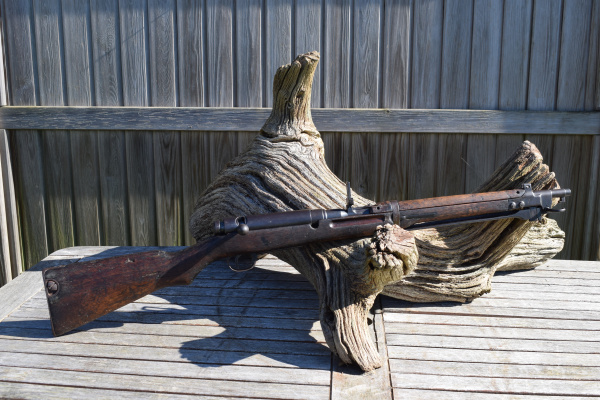
The first thing that is obvious when viewing this stocky carbine is; “Its been places..! and seen stuff and done stuff…” This is not one of those perfect “Showcase Queens” that occasionally appear before us. This is evidently a battle rifle that has been in a few scrapes. Predominantly, the stock wears most of the battle damage, but that is not surprising in itself, as the wood was never a very durable option. The metalwork is dark and in some places rust is appearing. In fact, you can obsrve all the interesting stages of corrosion these old rifles go through once they are finally cast aside. In my humble opinion however, this does not detract from the level of attraction this weapon generates, it merely moistens the appetite; to want to know more about its past lives.
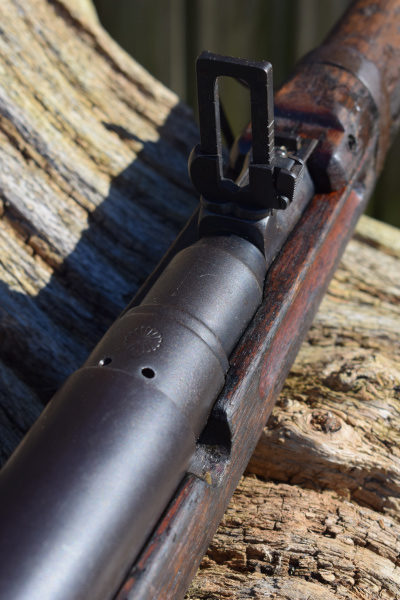
A standard Arisaka Type 38 action Carbine based upon the Mauser, but differing in a few details. The action is has become renowned for its strength in testing against other bolt action contempoaries. Alongside the rifle version of the Type 38, two Carbines were developed for the Cavalry, the first the Type 38, followed the Type 44 which was basically the same but included a folding bayonet. The “Type” designation actually has little to do with the year in western terms but, is in reference to the number of years the Emperor Meiji had been in on the throne. In western cronology, Type 44 actually equates to 1911 – it is easy to mix things up! The basic action, the type 38 was developed in 1905 and was a very close copy of the Mauser in use with the Imperial German Army.
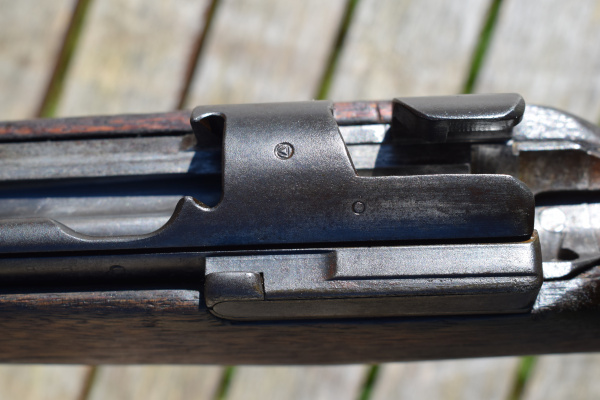
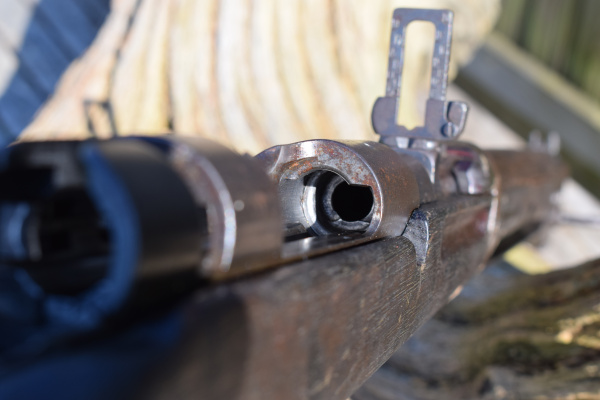
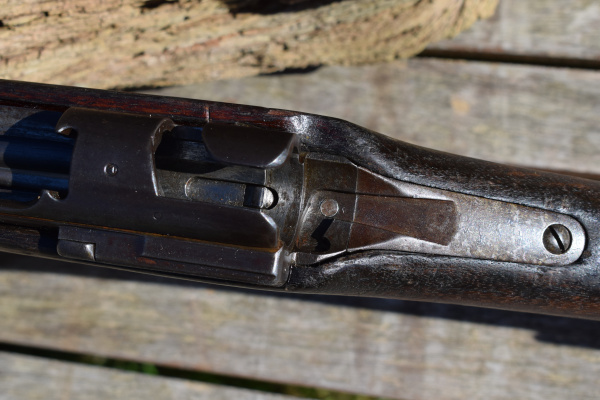
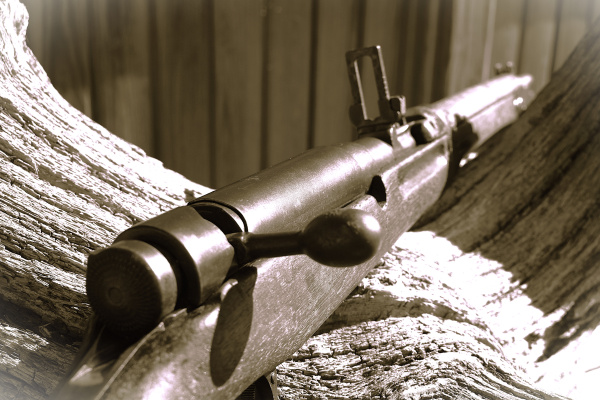
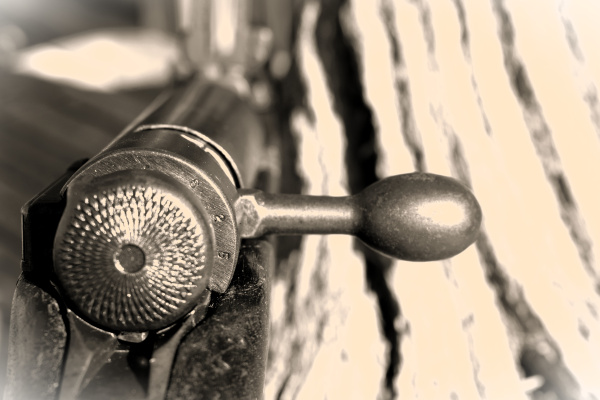
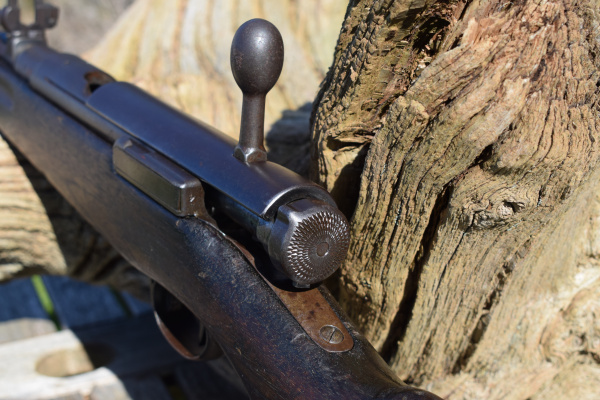
There are differences between the Arisaka and its German cousin. The most obvious is the Mushroom-head cocking piece/ safety device. The other main difference is internal, in that the Arisaka cocks on closing, where the Gewehr does the oposite. The rear end of the bolt has a superbly decorated, slightly domed end to the cocking piece. A notch at about the ten oclock position is the safety indicator. The domed decorated face allows purchase from the open palm of the hand, in wet or sliperry conditions; with a small amount of pressure exerted thus, turning it clockwise, applies the safety. The Japanese preferred this as they were acutely aware of the conditions the rifle would have to function in; and knew the habits of their own troops. It was a brave departure from convention, but the courage of their convictions held and they were proved right. Unlike many others inspected, the cocking piece actually shows wear from much usage around the boundary of the machiened pattern, suggesting much use.
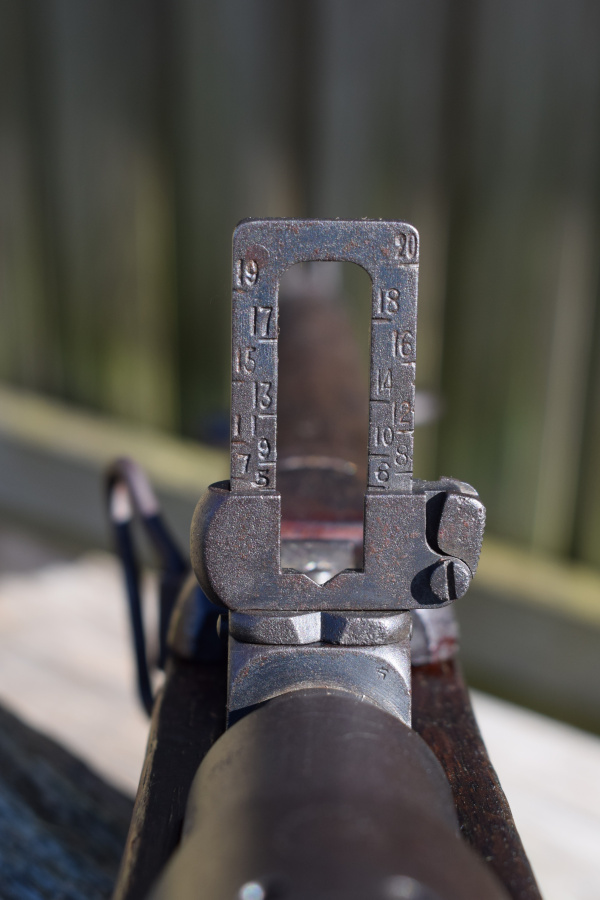
Chambered as the Type 38 rifle and carbine in 6.5mm x 51R, with a five shot internal magazine. 6.5mm is a very accurate round, consequently the carbine sights are actually graduated to a remarkable 2000 meters! It theoretically might be possible to shoot that far, but they were possibly only thinking about suppressing fire at that kind of distance. I really don’t see anybody pulling off a 2000 meters shot from horseback ! These weapons, although they were used in the Second World War, were primarily issued in the period of the Second Sino-Japanese War and the Russo-Japanese War. Through those conflicts they eventually concluded the round did not posess the knock-down power required and changed up to the 7.7mm.
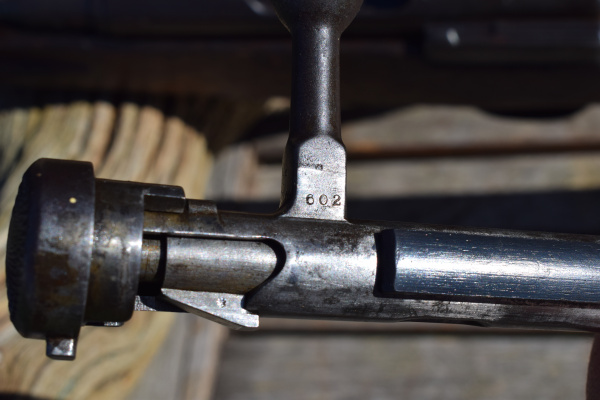
Matching numbers on the bolt stem it does not have, in fact nothing matches apart form the pattern of the pieces, everything is correct for this type of carbine. Wear is even all over externally and nothing jumps out as out of place within the patina. The bore is in a dark, slightly corroded condition, although obviously used – so it has “been there.” it would clearly benifit from the keen interest of a new owner/shooter to give it a new lease of life. Both the above mentioned conflicts really reached to a dark level of cruelty within the human condition – one has to wonder what this weapon has witnessed! Those conflicts made the second world war look like a walk in the park in comparison. (Not decrying the immense effort, sacrifice and hardships that any of Japanse enemies had to put up with!) The action is sound and functions correctly. This example oozes history and at the same time, demostrates the characteristics of a well used battle rifle. The timber shows all the signs of several generations of miltary conflict.
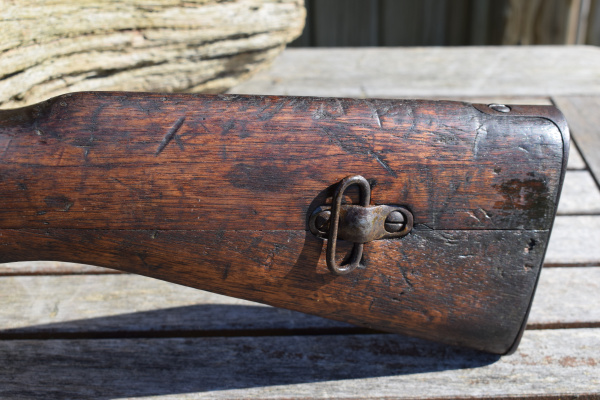
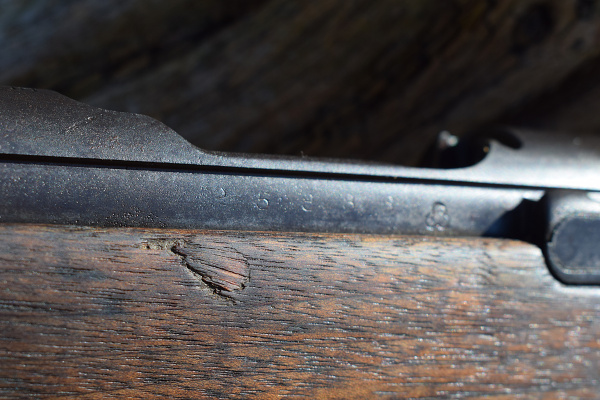
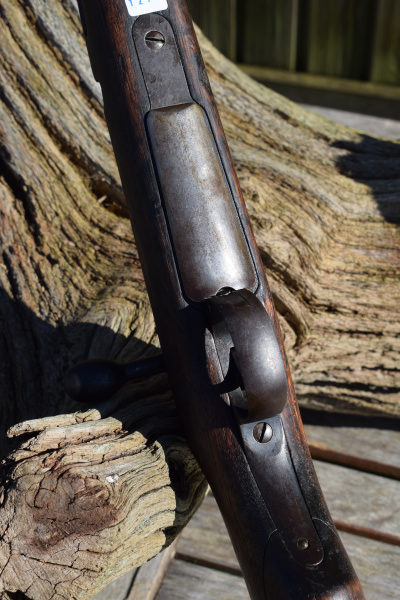
In the side of the butt, at 90 degrees to the butt-plate, is a turn screw that opens the cleaning rod hatch on the rear face of the butt. Interestingly, the two piece cleaning rod is still present – a rare part to find in place. A fascinating feature that the Japanese had to design into their weapons was a water run-off notch in the woodwork. Knowning of the abundence of unwanted water in the jungle, on the Type 44, this appears as a notch in the wasteline of the timber against the receiver ring. The stock has the two piece butt and despite the general conditon of this battle-hardened rifle has not become loose or rattles.
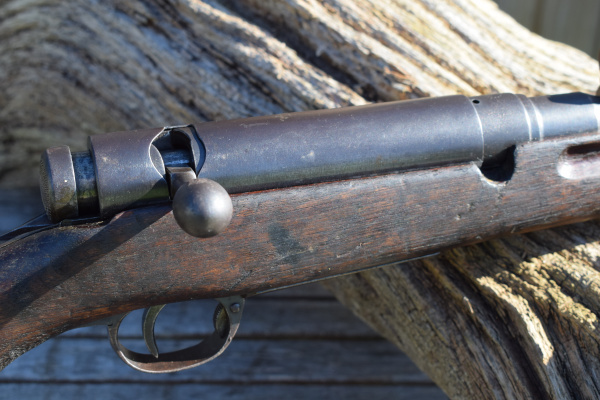
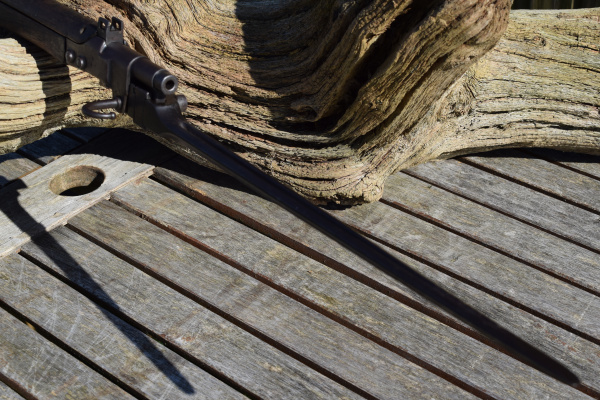
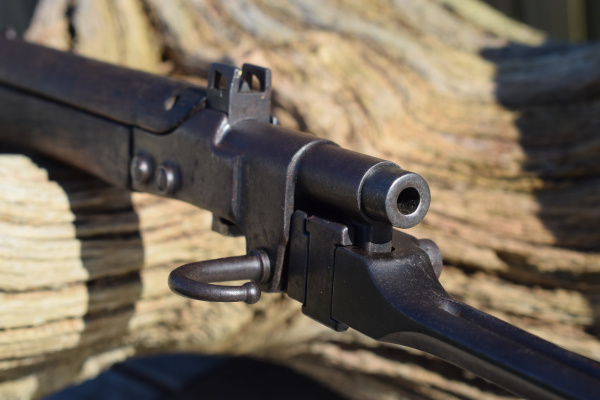
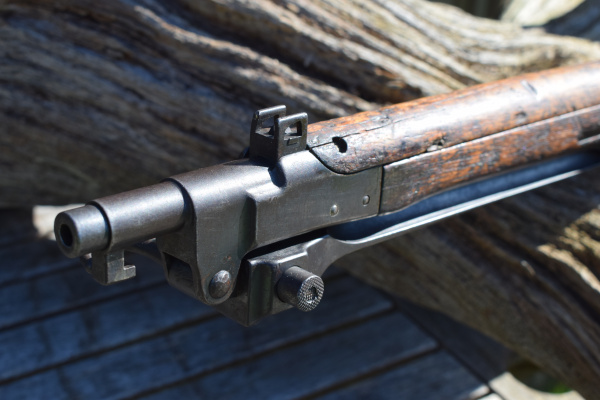
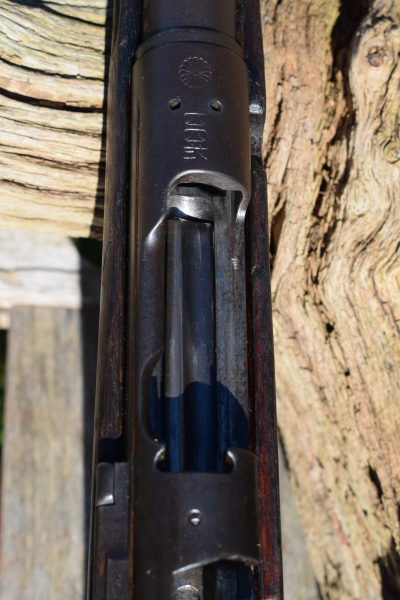
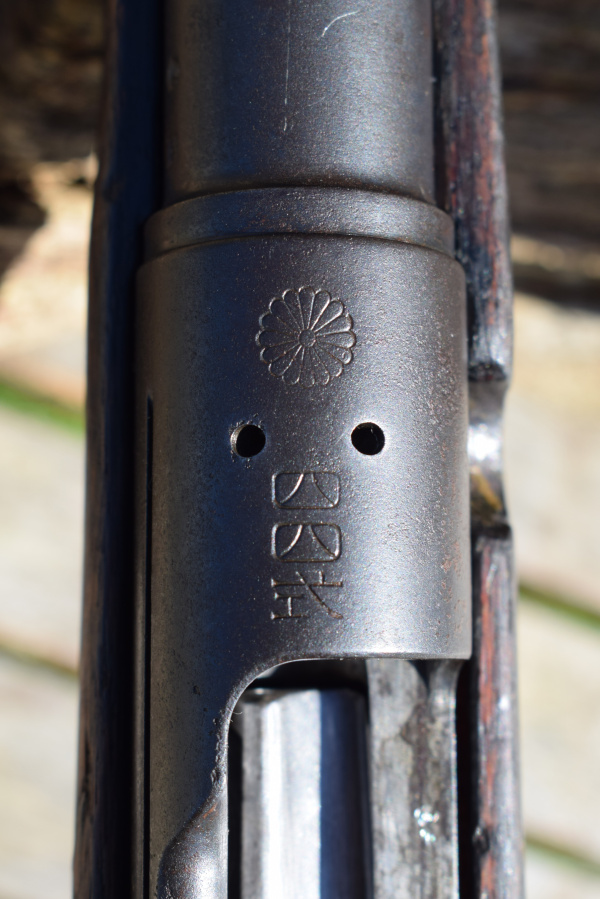
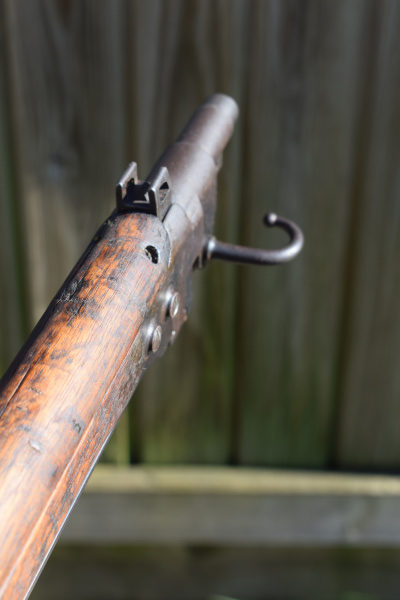
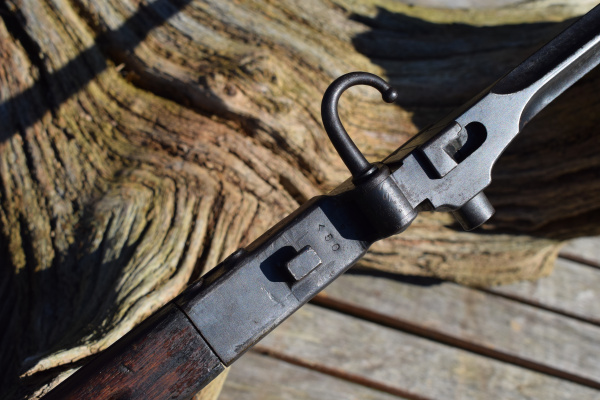
The side wall of the action shows the serial number ” 25886″ and the Kokura Army Arsenal. Next to the last are two more markings (undecipherable) usually the series and an inspector or subcontractor. On the crest of the receiver the Imperial Crysanthnum is intact and the Type 44 markings remain. Two horizontal gas escape holes emerge on the top of the receiver. Other arsenal and inspection marks appear on the balance of the rifle. The bolt carries a number on the stub which relates to another rifle captured at the same time. Standard ladder carbine rear sight with protected front sight. Side mounts for sling. Sliding dust cover of same patina in position with the numerals “625” on the rear face. Ath the muzzle it is had to miss the wonderful mechanisim of the folding batyonet and the dominant hook for bayonet fighting and stacking. All one has to do to bring the bayonet out is depress the cross-hatched button on the LHS and swing out the sturdy fluted 14″ spike with a satisfying metalic clunk! The reverse with release the blade and it can be folded back into its stored position. A nasty piece of kit to run up against and feature that made the rifle infinitely more versatile.
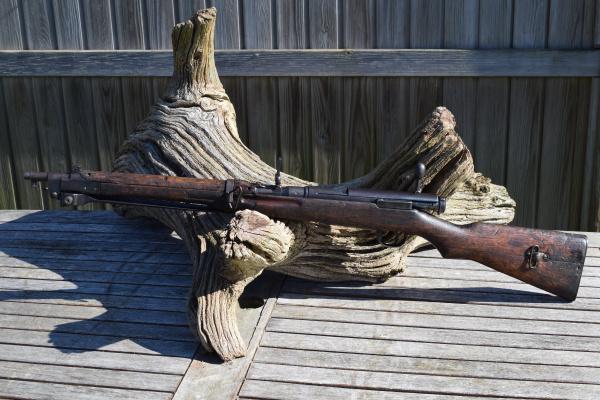
A real survivor from a wide era of conflict which makes no excuses for it appearance. Very much worth having for a serious collector.
FAC Required – Stock Number F 1276
£ 1150.
Comments Off on Type 44 Arisaka Carbine by Kokura Arsenal……….. (F 1276)